
The Antenna Dilemma - Single or Multiple Antennas for Bluetooth Channel Sounding
Many of the demonstrations of Bluetooth Channel sounding seen at Expos or other similar event have used Multiple Antenna solutions (MIMO). This has been promoted as giving the most accurate result, which is true, but not quite the whole story.
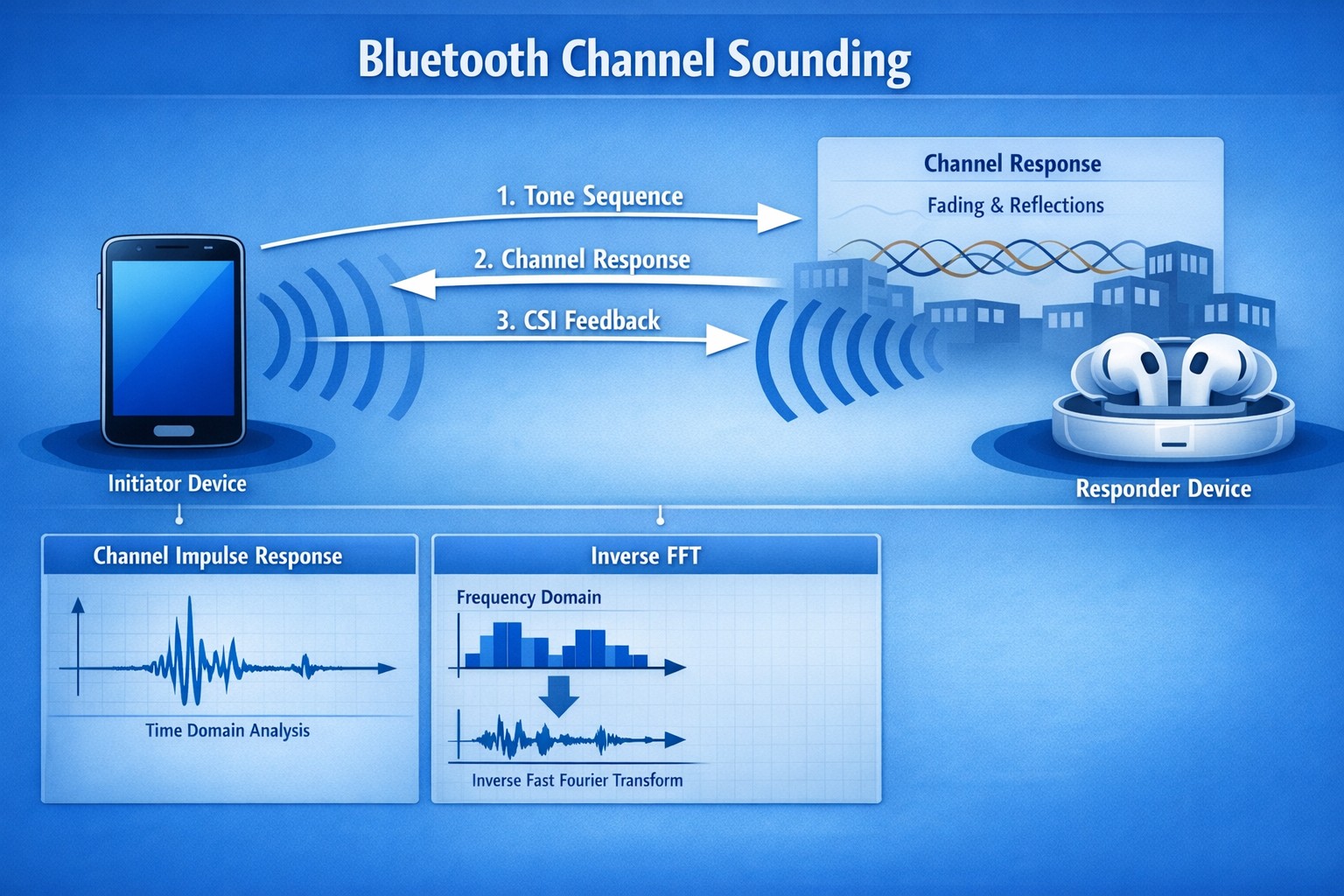
To recap briefly, in Bluetooth Channel sounding, you measure the phase difference between different channels of Bluetooth to determine the distance between two devices. Combined with a low accuracy time of flight measurement to remove ambiguity, you can get a good estimate of device separation. For a more detailed explanation of Channel Sounding, see here
The CS specification allows the option to use multiple antennas in a number of configurations, with the most accurate being a “2 x 2” configuration, meaning two antennas at each end (Initiator and Receiver). This offers 4 possible paths between antennas.
- Better probability of a strong signal via one path (assuming cross polarized antennas)
- Better capability to reject multipath and reflections
- More accurate and reliable distance measurement.
So this seems the obvious way to go, surely?
In fact, it isn’t so simple, when considering real world solutions for customers.
- A multiple antenna solution will inevitably be larger than one with a single antenna. To be effective, the antennas need to be separated by a ¼ wavelength, so about 3cm.
- The customer will likely have to design their own antenna solution to fit with their application, which requires at least a certain level of RF knowledge and design and test capability. There are not (to the best of our knowledge) dual antenna modules available.
- A poorly designed solution may lose any theoretical advantage of a multiple antenna solution.
- The customer will therefore also have to carry out certification of the device, and not be able to benefit from the advantages of a pre-certified device.
- A 2 x 2 antenna solution essentially means that the channel sounding measurement is carried out four times (once for each path). This means it takes longer, and consumes significantly more power. For a battery powered solution, this could be a significant drawback
- The solution requires more complex processing to combine the results from the four antenna paths.
None of the above is to intended to deny that the multiple antenna solution is capable of a higher level of accuracy and stability. However the question remains as to whether the additional complexity is worth it. Even with multiple antennas, channel sounding remains a “delicate” solution. Ultra-Wide Band based solutions will offer better precision for reasons based on fundamental physics RF principles.
The bottom line is that if neither low power nor solution size are major considerations, and the customer can design and test their own solution, then multiple antennas are probably the way to go.
If however that is not true, then using a pre-certified module like the ISP2454 may offer a solution better adapted to the customers overall needs. Some limited data processing (such as taking a rolling average, or filtering erroneous data) could mitigate some of the issues with a single antenna solution without requiring new hardware.
A further consideration is that many future use-cases may involve measuring distance between a device and a phone. So far only a limited number of higher end phones have channel sounding capabilities (the Google Pixel 9,10 and Samsung Galaxy S26 are understood to support it). However history shows that such features become standard relatively quickly, especially when it adds little by way of cost to the device.
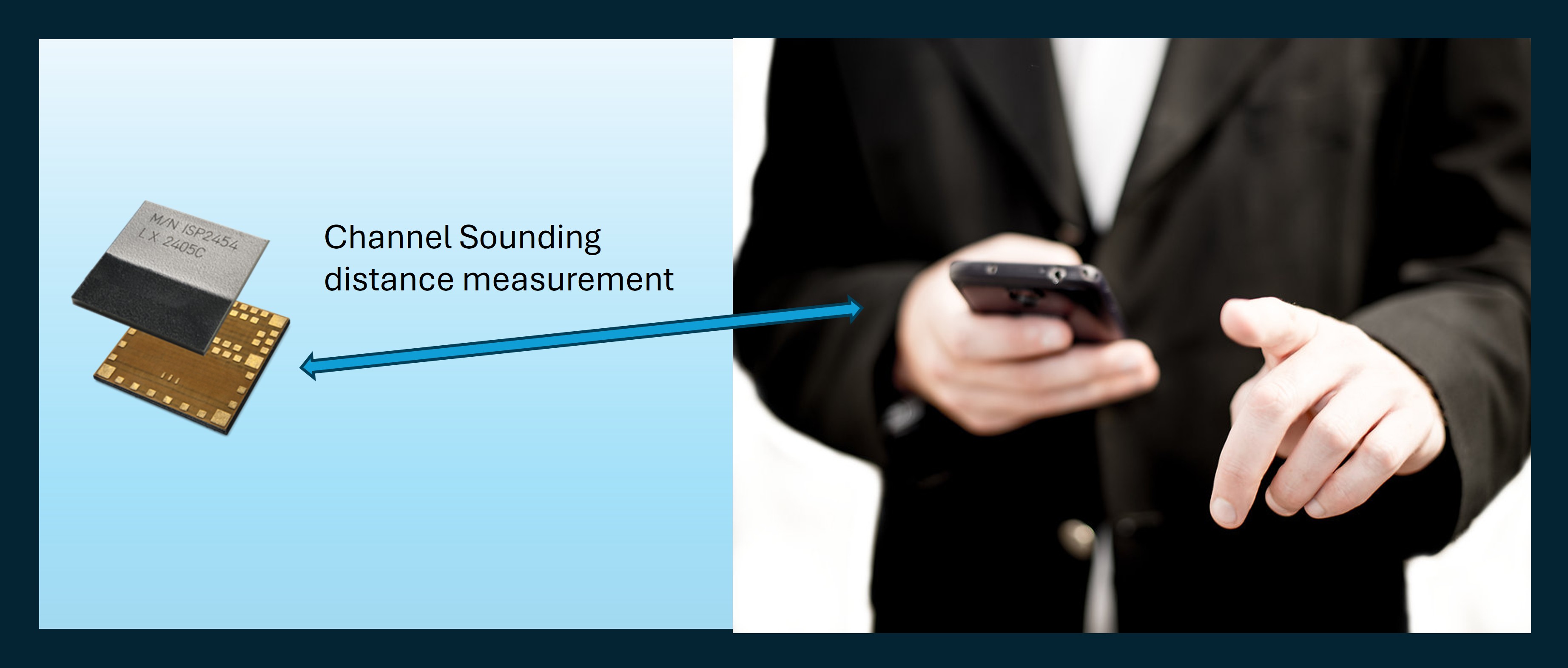
In such cases, the antenna configuration at one end is going to be dictated by the phone hardware, limiting the improvement by building a more complex device. We believe the Pixel devices have a dual antenna configuration, so you would already get the benefit of two antenna paths if using a standard module like the ISP2454-LX. For further details on using the ISP2454-LX with an Android phone, see Evaluating Bluetooth®︎ Channel Sounding with our open-source Android app on Google Pixel 10; this describes using a Nordic Semiconductor development kit for the nRF54L15 with a Pixel phone, but is equally applicable to use our our module based on this chip.
Ultimately, the question for the customer is how accurate is “accurate enough” for what they are trying to achieve.